Salon Missed Calls: Why Clients May Not Call Twice and How to Respond
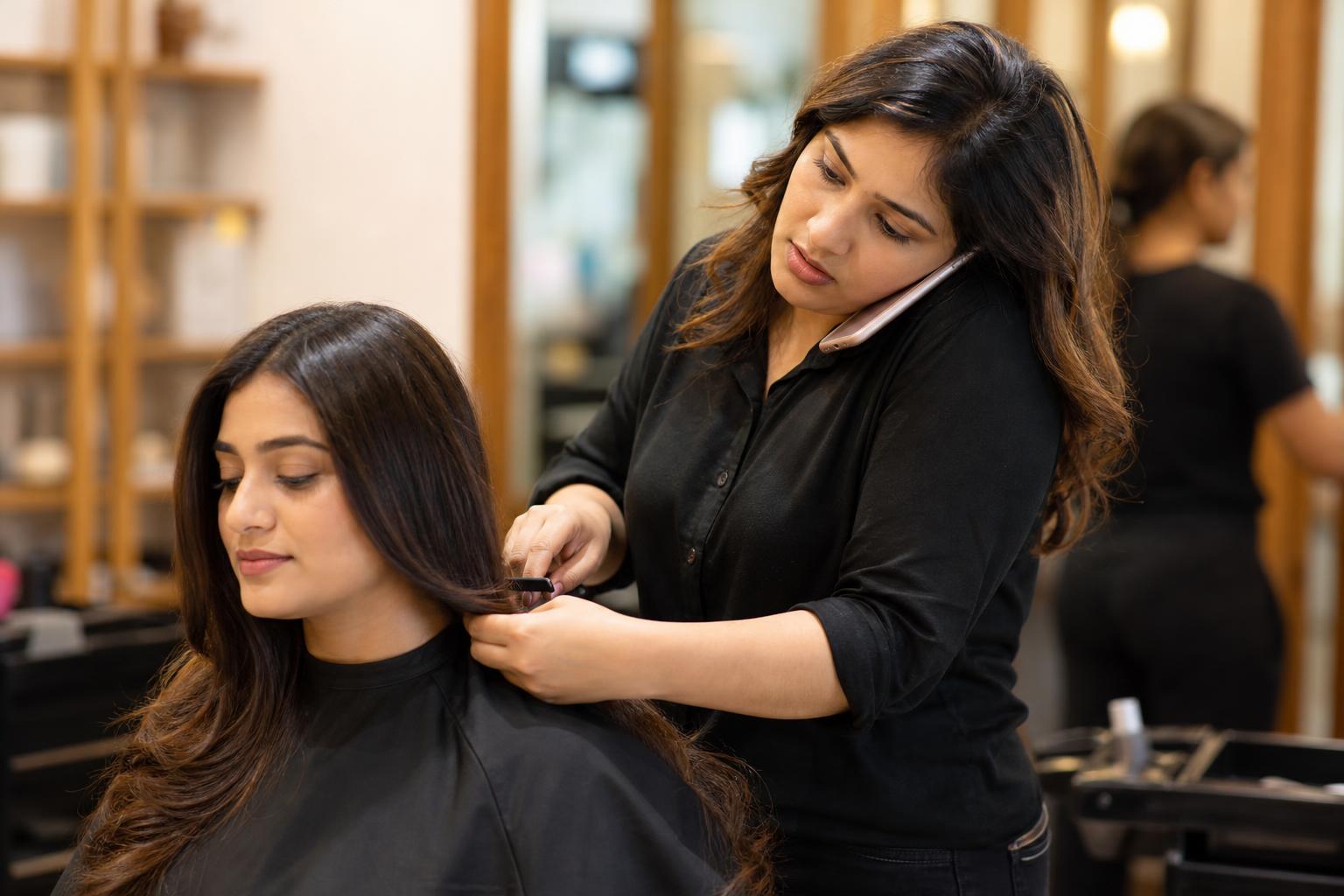
Salon missed calls need a clear follow-up process: assign someone to respond, find out what the caller needs and record the outcome. Imagine a busy Saturday at a salon in Ahmedabad. Jignesh is shampooing a client when the phone rings, and nobody else is free. At the end of the service, he sees two missed calls. One caller might want a new appointment; the other might need to change a booking. Without a shared process, neither enquiry has an owner.
The best way to handle salon missed calls is to combine reliable call coverage with a named follow-up owner for calls nobody answers. Give an available receptionist or team member responsibility for the phone during each shift, with a backup when that person is busy. If a call still goes unanswered, check whether a colleague has already responded, then call back or send an appropriate acknowledgement. Ask whether the caller wants a new booking, an appointment change or information before offering a slot. Record the owner, next action and final outcome in a shared log. A call-forwarding service, virtual receptionist or automated message can help cover busy periods, but test whether it can actually confirm appointments in your diary. If it cannot, a person must complete the handover. Do not count every missed call as lost revenue: review confirmed bookings and unresolved enquiries instead. The goal is to give callers a useful next step without asking stylists to interrupt the client in their chair.
Why can salon missed calls turn into lost bookings?
A caller looking for a particular day, service or stylist may not want to wait for an uncertain callback. They might try an online booking route, call another salon or decide to ask later. None of those outcomes is certain for an individual call. Until you follow up, a missed call is an open enquiry, not proof that you lost a client.
That distinction matters when you assess the problem. A phone log tells you that a call was unanswered; it does not tell you whether the caller wanted a haircut, directions, an appointment change or a conversation unrelated to booking. Treating every ring as a sale can make a new answering service look more valuable than your records justify. Ignoring the log altogether can leave genuine requests unanswered.
Start by sorting returned calls into four groups: new booking, existing appointment, general question and unknown. Record whether the enquiry was resolved. If someone books later through another channel, note that where your team can identify the connection rather than treating the call and booking as separate customers. Keep the process simple enough that staff will use it during a busy shift.
For a sample calculation, suppose a salon misses four genuine booking enquiries in one week. Suppose follow-up shows that one caller wanted a service priced at ₹800 but did not book. That represents ₹800 in potential service revenue, not a measured loss or an estimate of what a typical salon loses. The other three enquiries may have different outcomes. Use your own call and booking records before making a staffing or software decision.
How can you answer calls while you are with a client?
Protect the service in progress by deciding who handles calls before the phone rings. A stylist working directly with a client should not have to make an improvised choice between answering and finishing the service. Assign a primary phone owner and a backup for each shift, then agree on what happens when both are occupied.
- Choose the primary owner. This could be a receptionist, a manager between appointments or another available team member. Give them access to the current appointment diary and service information they need to answer ordinary questions.
- Name a backup. Specify who takes over during breaks, consultations and shift changes. “Anyone who is free” is difficult to act on when everyone assumes someone else will answer.
- Set a fallback. Decide whether unanswered calls go to voicemail, another number or a callback list. Check the fallback by calling your salon number yourself during a test.
- Schedule call-log checks. Choose check-in points that fit your rota rather than promising an immediate reply your team cannot deliver. Make someone responsible for enquiries still open at handover.
Give the phone owner a short script: “Namaste, [Salon Name]. Are you calling to book, change an appointment or ask about a service?” That opening helps route the conversation without assuming every caller is a new customer. If a caller asks about availability, check the diary rather than guessing from memory.
Some services require details before a slot can be offered. Ask only what your team needs to find a suitable appointment: the requested service, preferred day or time, any preferred staff member and a contact method for the reply. If the caller needs a conversation with a specific stylist, explain how your team will pass along the request. Do not promise that stylist’s availability until it has been checked.
What should a salon do immediately after a missed call?
First, check whether a colleague has already answered a return call or contacted the number. Duplicate callbacks can confuse a caller and create competing notes. Next, assign one person to follow up. That person should identify the salon, ask what the caller needs and record the next action—even if the caller does not answer.
If a message is an appropriate way to respond, keep it short and useful. For example: “Namaste, this is [Salon Name] in [Area]. Sorry we missed your call. Were you looking to book, change an appointment or ask a question? Reply here or call [number].” Replace the placeholders, test the reply channel and make sure someone will read incoming responses. A sent message is an acknowledgement, not a confirmed appointment.
When the caller responds, follow the right branch of the conversation. For a new booking, check the service, availability and any staff preference before confirming a slot in the diary. For an appointment change, locate the existing booking before offering an alternative. For a general question, answer it or assign the person who can. If the caller never responds, mark the enquiry unresolved rather than recording a booking or a lost sale.
A practical status list is awaiting first response, awaiting caller, staff action needed, booked, appointment updated, question answered and closed without a booking. Your salon can use different labels, but each should tell the next shift what happened. Keep notes factual: “Asked for Saturday colour appointment; availability to check” is more useful than “likely to book.”
Which salon call answering service fits your team?
A salon call answering service can mean several different things. A person might answer live, an unanswered call might forward to another number, or software might acknowledge the missed call and invite a reply. These options solve different parts of the problem. The question is not simply whether the phone gets a response; it is whether the caller reaches a useful outcome.
| Approach | Useful when | What to verify |
|---|---|---|
| Owner callback list | Staff can check calls between services | Who owns each callback and when open enquiries are reviewed |
| Shared staff rota | Several people can provide coverage | Primary and backup owners for every shift |
| Live reception coverage | Callers need a person during busy periods | Coverage hours, diary access and handover for unusual requests |
| Call forwarding | Another person or location can answer | What happens if the forwarded call also goes unanswered |
| Automated acknowledgement | No one can reply immediately | Whether replies reach staff and who completes a booking |
Use the table as a decision aid, not a ranking. A small salon with a dependable callback owner may prefer a simple process. A team with frequent simultaneous services may need live coverage at particular times. An automated acknowledgement can give the caller a route to respond, but it does not replace someone checking the conversation and confirming the diary.
When comparing providers, ask for a demonstration using your own service names and an ordinary shift scenario. Confirm coverage hours, supported languages, what happens outside those hours, whether appointments can be created or changed in your actual diary, and how staff receive unresolved requests. Verify current features and pricing directly with each provider before committing.
How do you choose a virtual receptionist for a salon in India?
A virtual receptionist is worth assessing if your team cannot consistently cover calls during operating hours. Test it as a caller would use it, rather than relying only on a feature list. Start with your salon number and a request for a service that appears in your diary. Then try a preferred stylist, a request in a language your callers use and a change to an existing appointment.
Check whether the service completes an appointment, proposes a slot for staff to approve or merely collects a message. Those are different outcomes. Ask what information staff see at handover and whether the caller is told clearly when confirmation is still pending. If you have more than one branch, test how a caller reaches the correct location.
For a salon in India, include your own operational details in the test: local area names, the way your team names services, your working hours and the languages you need to support. Use realistic requests, such as “I need a trim after work” or “Can I move my appointment with [stylist]?” The point is not to make the system answer every imaginable question. It is to find out which enquiries it resolves and which it passes to a person.
Intellibook AI is an option to assess for WhatsApp appointment conversations. If the original enquiry is a phone call, verify how that caller would reach the WhatsApp conversation; do not assume the call itself becomes a chat. The Intellibook AI salon booking software overview can help you assess its appointment workflow alongside your phone coverage and staff-handover plan.
How do you handle a missed call about a salon booking?
A missed-call salon booking starts as a request, not a reserved slot. Once you reach the caller, confirm what service they want and whether the request is for a new appointment or a change to an existing one. Check the actual diary. If a preferred time is unavailable, offer an alternative only after checking that it is available too.
Use a confirmation checklist so the caller and team understand the same arrangement:
- Has the requested service been identified clearly enough to choose the right diary slot?
- Has the day, time, branch and staff member, where relevant, been checked?
- Has the appointment been entered or updated in the diary?
- Does the caller know whether the slot is confirmed or still awaiting staff action?
- Can the next shift see any unfinished task and its owner?
If a caller asks a question you cannot answer, note the question and assign it. If they ask to cancel or reschedule, update the existing appointment only after you have located the correct entry. Do not use a generic “booking confirmed” reply for every conversation; it can create confusion when the team has only taken a message.
Before automating outbound messages, check the current requirements of your phone or messaging provider and the communication rules relevant to your setup. Make sure callers can recognise the salon and that replies go somewhere your team monitors. Do not treat a missed call as permission to send repeated promotional messages.
How can you test your missed-call process during a busy shift?
Run a short, defined test using a shared sheet or a system your whole team can access. Create fields for call time, phone number, assigned owner, enquiry type, next action and outcome. Avoid adding so many fields that staff abandon the log. At the start of each shift, check who owns the phone; at handover, review every enquiry that is still open.
Here is a hypothetical Bengaluru example. A salon identifies 12 missed calls in one week. The shift lead assigns all 12 for review. After follow-up, staff sort them into new booking enquiries, existing appointment matters, general questions and calls whose purpose remains unknown. They mark an appointment as booked only when it appears in the diary. The 12 calls are an example for testing a process, not a typical weekly total or evidence of lost revenue.
To make the test useful, include ordinary complications. What if someone calls twice from the same number? What if a client returns the call while the assigned owner is busy? What if a message receives a reply after closing? Decide how your team will avoid duplicate work and who sees late replies. Test the number callers actually dial, including any forwarding or voicemail route you have set up.
At the end of the test, review the open enquiries together. Ask whether each had an owner, whether promised follow-up happened and whether the next shift could understand the notes. Look at confirmed diary outcomes separately from unanswered calls. If ownership is the main gap, fix the rota first. If staff are consistently unavailable to respond, then compare coverage or automation options against the requests your callers actually made.
What should your salon handover checklist include?
A missed-call process often breaks when the person who began a conversation leaves for the day. Use a brief handover checklist that works for both phone calls and replies through another channel. It should show the next person what to do, not force them to reconstruct the conversation.
- Caller and context: Record the number and a name if the caller provided one. Note the channel used for the latest reply.
- Request: State whether this is a new booking, an existing appointment, a general question or still unknown.
- Diary status: Say whether a slot is confirmed, being checked or not yet discussed.
- Next action and owner: Name the staff member who will respond or complete the update.
- Caller expectation: Note any response the team has promised, without promising a time it cannot meet.
Before closing the shift, read the open items aloud or review them together. An unanswered forwarded call, an unread message and a booking request waiting for confirmation all need a next owner. Once an enquiry is resolved, update its status so another team member does not restart the conversation.
Frequently asked questions about salon missed calls
What is a salon call answering service?
A salon call answering service handles calls staff cannot take directly. Depending on the setup, a person may speak to the caller, a call may forward to another number, or software may acknowledge an unanswered call. Ask whether it can confirm appointments in your diary or only collect requests, and assign someone to handle anything unresolved.
How can I answer calls while with a client?
Assign an available receptionist or team member as the phone owner, with a backup for busy periods. If nobody can answer, use a callback list or an appropriate acknowledgement and name the person who will follow up. Check responses between services and at shift handover; do not expect a stylist to interrupt every appointment.
What should I do after a missed call about a salon booking?
Check whether a colleague has already responded, then assign one person to contact the caller. Ask whether they want a new appointment, a change to an existing booking or an answer to a question. Check availability in the diary before confirming a slot, and record the outcome so the next shift knows what remains open.
How do I choose a virtual receptionist for a salon in India?
Test it using your phone-number setup, local service names, preferred languages and real appointment scenarios. Try a new booking, a change request and a question that needs staff help. Confirm whether it can update your diary or only pass along messages. Verify current features and pricing with the provider before choosing a service.
Key takeaways
- Give every missed caller an assigned owner and a clear next step.
- Separate new bookings, appointment changes, general questions and unknown enquiries.
- Test reception, forwarding or automation using your actual diary and busy-shift workflow.
- Count confirmed outcomes, not every missed ring, when reviewing results.
Give missed salon callers a clear route to booking
If your team follows up by phone and then handles appointment requests in WhatsApp, assess whether Intellibook AI fits your diary and staff-handover process. Confirm how a missed phone caller enters that conversation before setting it up.