Turf Price Per Hour in India: Setting Day, Night and Weekend Rates

In a hypothetical Coimbatore turf business, Kavitha has open weekday afternoons but competing requests for Friday evening. Should her turf price per hour change with the slot? She needs a rate card that covers her costs without treating every night and weekend hour as equally busy.
Set your turf price per hour by calculating what each bookable slot needs to earn, then adjust for observed demand, lighting and what the booking includes. First, define the unit you sell: the named pitch or court, playing time, capacity and any equipment. Estimate a cost floor using your own expenses and a cautious forecast of hours you expect to sell. Compare nearby venues with similar facilities, then group your hours into understandable bands such as weekday daytime, weekday evening, weekend daytime and weekend evening. Charge more for a band only when its booking pattern supports that choice. You can include normal floodlight use in the night rate or show it as a separate add-on; either way, display the full amount before confirmation. Keep box-cricket and football rates distinct if their facilities differ. Finally, review occupancy and enquiries by slot, rather than assuming every weekend booking can bear a premium.
What should your turf price per hour include?
State whether the rate buys an entire pitch, a smaller court or a box-cricket enclosure. Specify whether the booked hour includes setup and clearing time, and list any capacity limit or included equipment. Two hourly prices are not comparable if they buy different spaces or playing time.
Build a cost worksheet from your own records: rent or loan payments, staffing, cleaning, routine repairs, a reserve for surface replacement, electricity and booking or payment costs. Separate costs that continue while the pitch is empty from costs that rise when a team plays. Check any applicable tax treatment with your accountant rather than assuming a sample rate is your final payable price.
For a working cost floor, total the expenses you need bookings to cover over a chosen period and divide by a cautious estimate of hours you expect to sell—not every available hour. Add the margin your business needs, then compare the result with genuinely similar local venues. As context, TurfBox reports a typical Indian turf booking range of ₹600–₹2,000 per hour, varying by city, turf quality and slot. That reported range is not a tariff for your venue.
How do you set day, night and weekend turf rates?
Start with a weekday daytime base, then assess weekday evenings, weekend daytime and weekend evenings separately. Check which hours fill early, attract repeat teams or receive enquiries after they are booked. Do not apply a weekend premium to an hour that regularly sits empty merely because it falls on Saturday or Sunday.
The table is an illustrative rate card for one hypothetical venue, not a city average or recommended price. Assume each row buys the same court for one hour and that normal lighting is included in the evening rates.
| Booking slot | Sample hourly rate | Lighting treatment |
|---|---|---|
| Weekday afternoon | ₹900 | Lights off; state what happens if requested |
| Weekday evening | ₹1,100 | Normal lighting included |
| Weekend afternoon | ₹1,000 | Lights off; state what happens if requested |
| Weekend evening | ₹1,250 | Normal lighting included |
In this sample, a two-hour weekday evening booking costs ₹1,100 × 2 = ₹2,200 before any separately disclosed applicable charges. Do not add a standard floodlight fee to that total: lighting is already included in the sample evening rate. Publish the precise start and end times for each band so a booking that crosses bands has an unambiguous price.

How much should you charge for box cricket per hour?
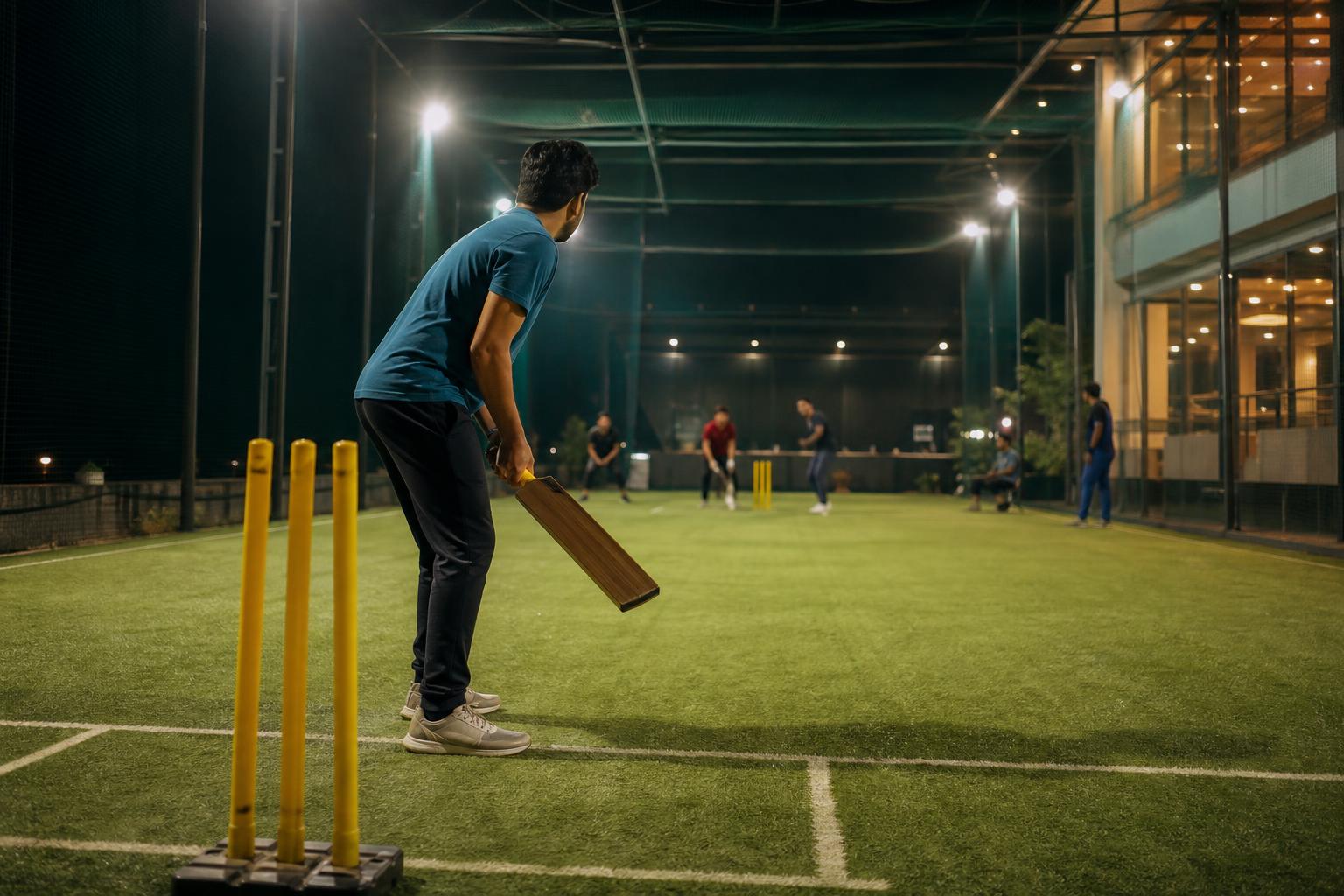
Set a box-cricket hourly rate for the specific enclosure and inclusions you sell. The research notes do not establish a separate national box-cricket average, so a football-pitch rate should not be presented as one. Check nearby box-cricket venues with comparable playing space, surface condition, netting, lighting, seating and equipment.
For a sample calculation only, a court priced at ₹1,000 per hour costs ₹1,000 × 2 = ₹2,000 for two hours before any separately disclosed additions or applicable taxes. State any minimum booking duration before the customer chooses a slot. If you offer both box cricket and football, use separate rate cards when the playing areas or inclusions differ.
Should turf floodlight charges be included in the night rate?
Either include normal floodlight use in the night price or disclose a separate lighting add-on. Estimate the incremental cost from your own bills, equipment use and operating times; the research notes do not establish an India-wide floodlight fee. Whichever approach you choose, avoid charging for the same lighting twice.
Here is a separate illustrative add-on calculation, not an addition to the evening rates in the table: a two-hour booking at a ₹1,000 hourly base plus a disclosed ₹150-per-hour lighting add-on totals (₹1,000 × 2) + (₹150 × 2) = ₹2,300 before any applicable taxes not already included. Show that complete breakdown before confirmation. Specify when lights switch on, whether customers may request them early and how a booking that runs into darkness is charged.
What belongs on a turf rate card?
A useful rate card lets a customer work out the payable amount without asking staff to interpret it. Before publishing, check that it shows:
- The named pitch or court, capacity and included equipment.
- Weekday and weekend definitions, slot boundaries and the rate for each band.
- Minimum duration and how a booking crossing two rate bands is calculated.
- Whether floodlights are included, optional or charged separately.
- Any overtime, cancellation and rescheduling terms.
- The full amount shown before confirmation, including a clear explanation of any applicable charges not included in the displayed rate.
Keep one dated master card for staff quotations, reception and booking messages. Where manual handoffs lead to inconsistent quotes, turf and badminton court booking software from Intellibook AI is an option to assess for sharing slot information and handling booking conversations. Check its current capabilities against your workflow before adopting it.
How can you test whether weekend turf pricing works?
Track confirmed hours, enquiries, cancellations and repeat bookings by individual slot. Compare Saturday evenings with other Saturday evenings, rather than using total weekend sales to justify every rate. An hour that fills early and turns away further enquiries may be worth testing at a higher published rate; an hour with little interest needs a different response.
Change one variable at a time. For example, test the price of a consistently busy weekend-evening band while keeping its booking minimum and inclusions unchanged. Compare like-for-like slots before and after the change, and note other reasons a customer gives for not booking. Give regular teams notice of published changes and keep the agreed price for an existing booking clear.
The practical sequence is simple: establish a cost floor, define each booking unit, publish understandable slot bands, disclose lighting and other additions, then review what sells. If your team handles quotes through WhatsApp, make sure everyone uses the same current rate card; Intellibook AI may be worth evaluating when coordinating those conversations becomes difficult.
Frequently asked questions about turf rates
What is the box cricket price per hour in India?
There is no separate verified India-wide box-cricket average in the research notes used here. Calculate a rate for your own enclosure using its costs, playing area, condition and included facilities. Compare nearby venues that offer a similar booking, then publish day and evening prices where your demand supports a difference. Treat sample amounts as examples, not benchmarks.
How much are turf floodlight charges?
There is no verified India-wide floodlight charge in the research notes used here. Estimate your venue’s incremental lighting cost from bills and operating times. You can include normal use in the night rate or disclose a separate add-on. State when lighting applies and show the full booking amount before the customer confirms; do not charge twice.
How should I set weekend turf pricing?
Compare bookings and enquiries for each weekend hour with comparable hours over time. Test a higher rate where slots repeatedly fill early, but do not assume every Saturday or Sunday hour needs a premium. Calculate your cost floor first, check comparable local facilities, publish the full price and inclusions, and review demand after a change.
Keep day, night and weekend quotes consistent
Once your rate card states slot prices and lighting rules, assess whether Intellibook AI fits your process for answering turf booking enquiries and passing unusual pricing questions to staff.
Explore turf booking setup →Ready to automate your bookings on WhatsApp?
Set up your AI receptionist in under 10 minutes. No coding required.
Start 7-day free trial →